Coonawarra Wine Region: A Cabernet Road Trip From an Adelaide CBD Base
The most famous strip of red dirt in Australian wine is a half day drive from our front door. Here is how to do Coonawarra properly, with Adelaide as the easy start and the soft landing at the end.
Guests ask me about the Barossa every week, and I send them happily, because it is an hour up the road. The ones who ask about Coonawarra get a different answer: it is further than you think, it is better than you have heard, and it is not a day trip. Give it three nights and it will hand you some of the finest cabernet sauvignon in the country, poured by the people who made it, in a region small enough to cross in a quarter of an hour.
This guide is for the traveller who is flying into Adelaide and wants to add Coonawarra to the trip without making a mess of the logistics. It covers the drive from our Pulteney Street address in the CBD, the best months to go, which cellar doors deserve your first morning, what else is down there besides wine, and how to shape the whole thing as a loop that starts and finishes in the city.
Why Coonawarra is worth the drive
Coonawarra sits on the Limestone Coast in the far south east of South Australia, roughly 380 kilometres from Adelaide and about halfway to Melbourne. On a map it barely registers. The whole reputation rests on a single cigar shaped strip of terra rossa, a rust red clay over soft white limestone, that runs north from the town of Penola. It is only a couple of kilometres wide and, depending on who is measuring, somewhere between twelve and fifteen kilometres long.
That is the entire famous bit. You can drive the length of it in the time it takes to finish a coffee. The red soil drains freely, the limestone underneath holds clean water, and the sea is only about sixty kilometres away, which keeps the summers mild and the ripening slow. Winemakers like to compare the climate to Bordeaux, and the comparison holds up in the glass: Coonawarra cabernet is structured, fragrant and built to age, with a mint and blackcurrant note that people who love it can pick blind.
The history is as tidy as the geography. A Scottish pastoralist named John Riddoch planted the first vines here in 1890 and built a handsome three gabled stone winery to go with them. The region then spent half a century being ignored, until the Wynn family bought the old Riddoch cellars in 1951 and put those gables on a label that is still in bottle shops today. Coonawarra has been the benchmark for Australian cabernet ever since.
Getting there from Adelaide
The honest number is four to four and a half hours behind the wheel. The direct route leaves the city on the South Eastern Freeway, climbs through the Adelaide Hills, drops to the Murray at Tailem Bend, then follows the Dukes Highway to Keith and the Riddoch Highway south through Naracoorte to Coonawarra and Penola. It is an easy, open drive on good roads, and Naracoorte is the natural place to stop for lunch.
The scenic alternative runs down the coast instead: Tailem Bend to Meningie, along the edge of the Coorong, through Kingston SE and Robe, then inland to Penola. It adds time and is worth every minute. My advice is to take the inland road down and the coast road home, which turns a long drive into two different days out.
If you would rather not drive the whole way, regional flights from Adelaide to Mount Gambier take a little over an hour, and Penola is about forty minutes north of the airport by hire car. Coaches also run between Adelaide and the Limestone Coast; check the current timetable before you build a plan around one, because services do not run at every hour of every day.
Either way, the trip works best when Adelaide carries the first and last nights. You land, sleep, and collect a hire car in the city the next morning instead of driving four hours off a flight. If you are still deciding how long to give the city itself, my guide to how many days is enough in Adelaide covers that side of the sum.
When to go
Coonawarra is a year round region with four distinct moods, and the local winemakers have built an event around each of them.
Spring: Cabernet Celebrations
October is the headline month. The Coonawarra Cabernet Celebrations run across three weekends, and in 2026 that means 1 to 18 October, with more than forty free and ticketed tastings, long lunches, dinners and live music sessions spread across the cellar doors. A shuttle bus loops the wineries on the festival Saturdays, with day passes from $23.50, which solves the question of who drives. If you are reading this in spring, this is the reason to go now.
Summer: racing and long evenings
January brings the Coonawarra Vignerons Cup at Penola Racecourse, a country race day with the region's wine poured trackside. The 2027 meeting is set for 15 January. Summer days are warm and dry without the heat of the Barossa, and the Blue Lake at Mount Gambier, about forty minutes south of Penola, turns its famous cobalt colour over the warmer months.
Autumn: vintage
March and April are harvest. The vineyards turn gold and red, the wineries are working around the clock, and Coonawarra After Dark opens a handful of them for evening tastings and dinners in April. It is the most atmospheric time to visit and the hardest to get a table, so book ahead.
Winter: the cellars open up
July is Cellar Dwellers month, when the wineries bring out back vintages and cellared wines you cannot normally taste or buy. Cold mornings, open fires and ten year old cabernet make a very good argument for a winter road trip. For the city half of your dates, my month by month guide to Adelaide will tell you what is on in town before and after.
It is further than you think and better than you have heard. Give it three nights.
The cellar doors I send guests to
With more than twenty to choose from you will not get to them all, and you should not try. Four in a day is plenty. These are the seven I would start with, in roughly the order I would visit them. Opening hours and tasting formats change through the year, so check each winery's own site and book ahead for anything seated.
Wynns Coonawarra Estate
The three gabled stone winery John Riddoch built in the 1890s, and the building on the label of the best known Coonawarra cabernet in the country. This is where the story of the region is told best, so make it your first stop and the rest of the day will make more sense.
Redman Wines
One of the oldest winemaking families in the district, with roots here going back to the early 1900s. The range is short, the reds are traditional and the welcome is unhurried. Come here to taste what Coonawarra was before it was famous.
Zema Estate
A family run winery where the same people grow the grapes, make the wine and pour it. The cabernet and shiraz are generous and honestly priced, and the family's pizza and live music afternoon is a fixture of the October festival.
Rymill Coonawarra
A big, handsome winery at the top of the strip, founded by a descendant of John Riddoch himself, with platforms that let you look down over the working cellar. It is an easy place to bring people who are not wine obsessives, and it hosts the family day during Cabernet Celebrations.
Raidis Estate
A young family winery with Greek roots, a resident herd of goats that helps keep the vineyard tidy, and the most relaxed tasting bench in the region. If you are travelling with someone who finds cellar doors a bit formal, start them here.
Penley Estate
Proof that Coonawarra is not standing still. The wines here are brighter and lighter on their feet than the regional stereotype, and tasting them straight after Wynns or Redman shows you both ends of what this soil can do.
Majella Wines
A family of graziers who grew grapes for other labels before making their own, which shows in the quality of the fruit. The sparkling shiraz is the bottle to carry home for Christmas lunch, and a fine note to end the day on.
Bookend your Coonawarra trip with a night in the Adelaide CBD.
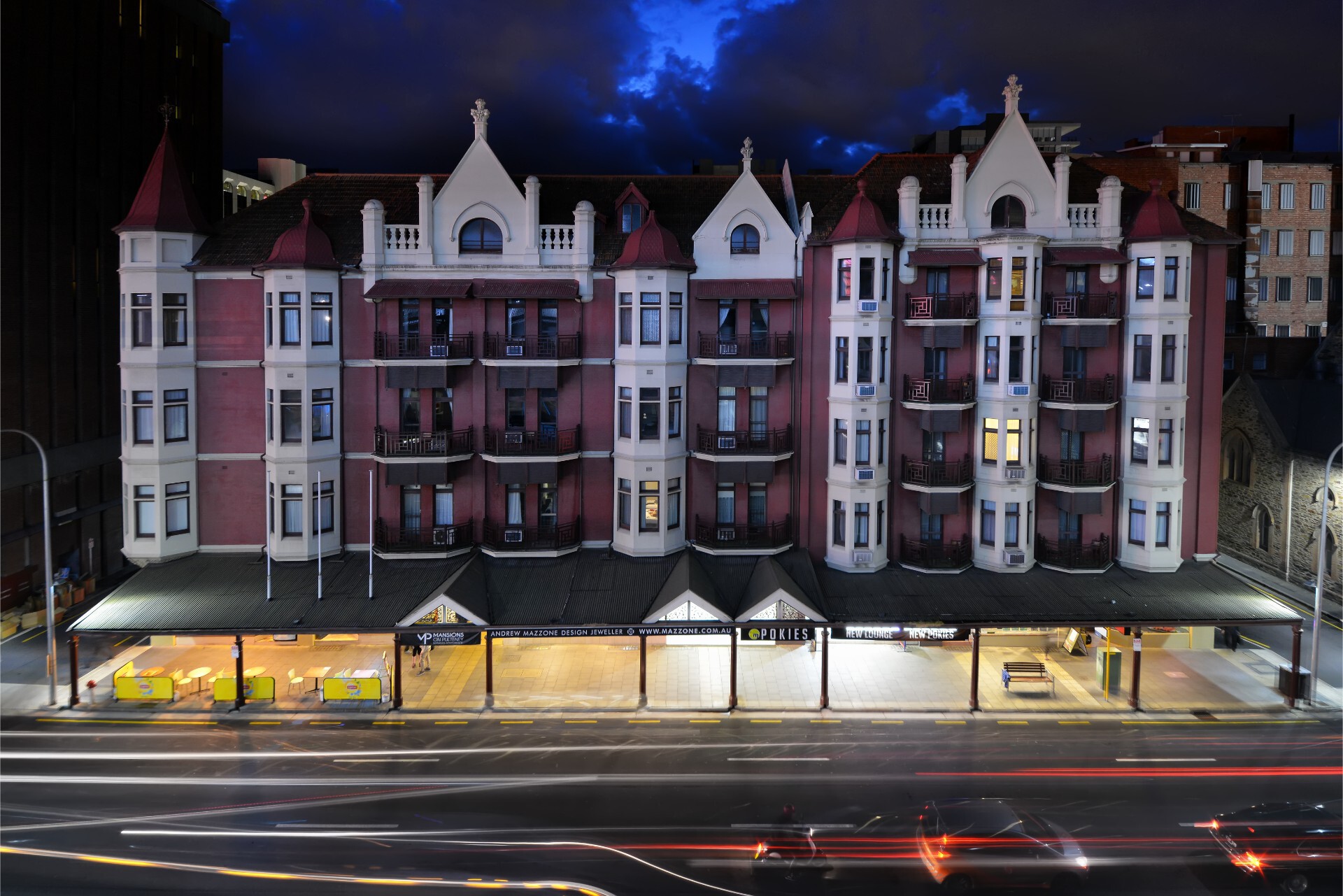
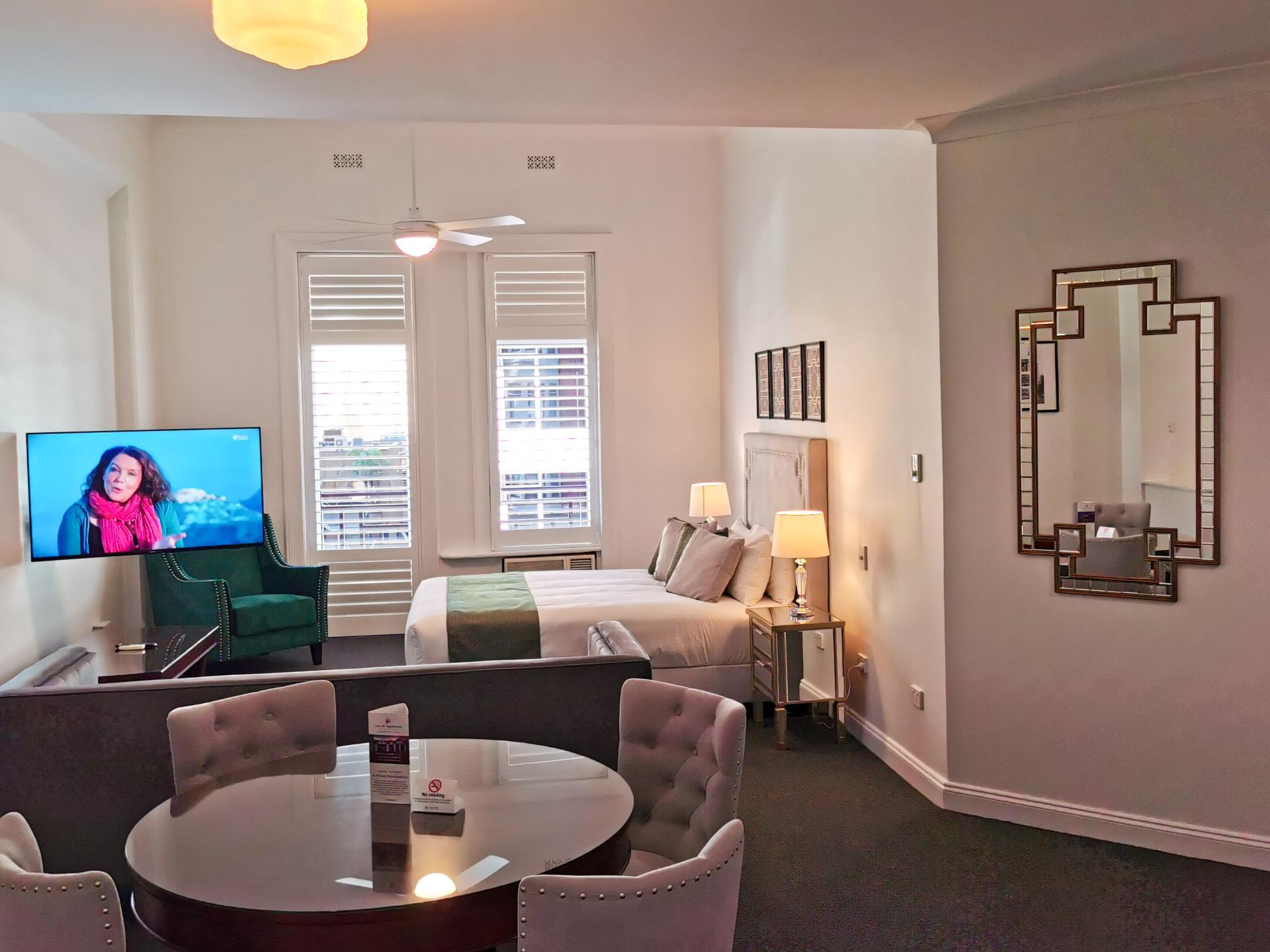
Adelaide Mansions is a heritage building on Pulteney Street with self-contained serviced apartments, a short walk from Rundle Mall and North Terrace. Land, rest, and leave for wine country fresh.
Check AvailabilityPenola, the caves and the coast
Nobody can taste all day, and the Limestone Coast gives you good reasons to stop.
Penola
Penola is the town at the southern end of the strip and the place most people stay. It is small, pretty and proud of its history. Mary MacKillop, Australia's first saint, co-founded the Sisters of St Joseph here in 1866, and the Mary MacKillop Penola Centre tells that story well. Around the corner, Petticoat Lane is a row of timber and stone cottages from the 1850s that looks much as it did when she walked it.
Naracoorte Caves
About half an hour north of Coonawarra, the Naracoorte Caves are a World Heritage site, listed for a fossil record that runs back hundreds of thousands of years. The guided tours take you underground past the bones of giant marsupials that once lived on this plain. It is the best non-wine stop in the region, and it sits right on the inland road from Adelaide, so do it on the way down.
Mount Gambier
About forty minutes south of Penola, Mount Gambier is built on the side of an extinct volcano. The Blue Lake fills the crater and the Umpherston Sinkhole, a sunken garden in a collapsed cave, is one of the most photographed places in the state. It makes an easy half day from Penola.
Robe and the Coorong
The coast road home passes through Robe, a fishing port with a main street of old stone buildings and some of the best crayfish in the country in season. North of Kingston SE the road runs beside the Coorong, a long, wild lagoon behind the dunes that feels a world away from the city you will be sleeping in that night.
A four day loop from a CBD base
This is the plan I give guests who have a week in South Australia and want Coonawarra to be the centrepiece. It assumes a night in Adelaide at each end.
The night before: Adelaide
Arrive, check in and stay on foot. Have dinner at one of the best restaurants in the Adelaide CBD, order something from Coonawarra off the list as a preview, and get an early night.
Day one: Adelaide to Penola, inland
If it is a market day, walk to the Adelaide Central Market when it opens and stock an esky with cheese, bread and smallgoods for the road. Collect the car and leave the city by nine. Lunch in Naracoorte, an afternoon tour at the caves, and you will be in Penola in time for a walk down Petticoat Lane before dinner.
Day two: the northern cellar doors
Start at Wynns for the history, then work north along the strip. Three or four tastings with a proper lunch in the middle is the right pace. Be back in Penola by late afternoon.
Day three: the rest of the strip, or Mount Gambier
Wine lovers should spend the morning at the cellar doors they missed and the afternoon on the walking trail. Everyone else can drive south to the Blue Lake and the sinkhole and be back for a last dinner in Penola.
Day four: Penola to Adelaide, by the coast
Leave early and take the long way: Robe for coffee and a walk on the jetty, Kingston SE for lunch, the Coorong in the afternoon. You will reach the city around dinner time, which is exactly when you will be glad of an apartment where you can drop the bags, put the wine somewhere cool and stay put.
Tasting Coonawarra without leaving Adelaide
Not every trip has four spare days, and I would rather you taste Coonawarra in the city than rush it on the road. Adelaide is the capital of a wine state, and the region's wines are everywhere once you know where to look.
The National Wine Centre of Australia sits at the eastern end of the city beside the Botanic Garden, an easy stroll from us along the boulevard covered in my North Terrace visitor guide. Its tasting room pours wines from regions right across the country, Coonawarra included, so you can line a Limestone Coast cabernet up against a Barossa shiraz and decide for yourself. The wine bars and bottle shops of the East End, five minutes from our door, will fill in any gaps.
The winemakers also come to you. The Coonawarra Wine Tasting Roadshow tours the capital cities each winter, Adelaide among them, with up to twenty five producers pouring more than a hundred wines in a single room. If your dates line up, it is the fastest education in the region you can get, and you can do the whole thing as part of a no-car weekend in Adelaide.
Why Adelaide Mansions is the smart base for a Coonawarra trip
A wine country road trip is won or lost on the nights either side of it. Fly in and drive four hours the same afternoon and you arrive in Penola tired and late. Drive four hours back and go straight to the airport and the best bottles of the trip never get opened. A night in the city at each end fixes both, and that is where Adelaide Mansions earns its place.
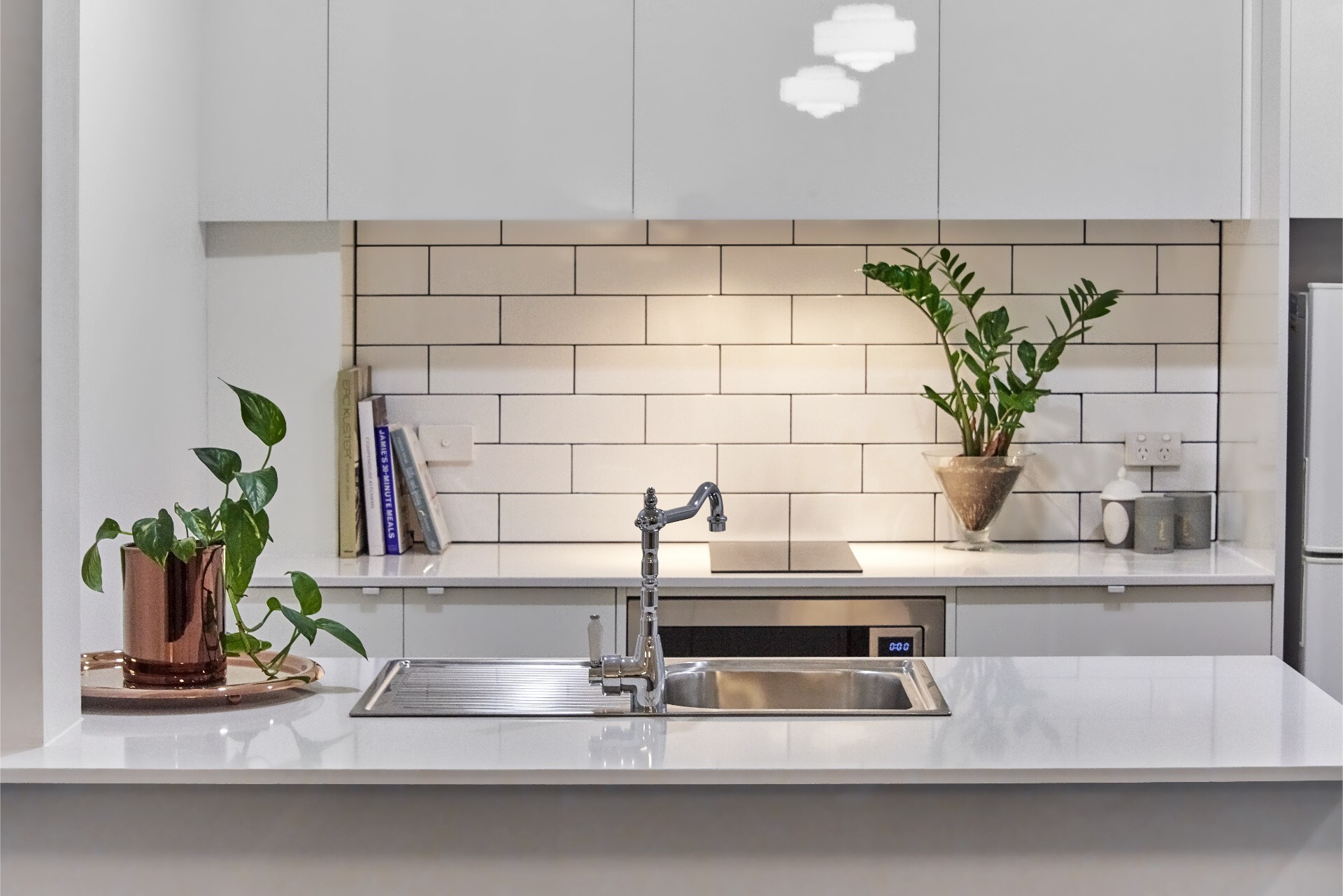
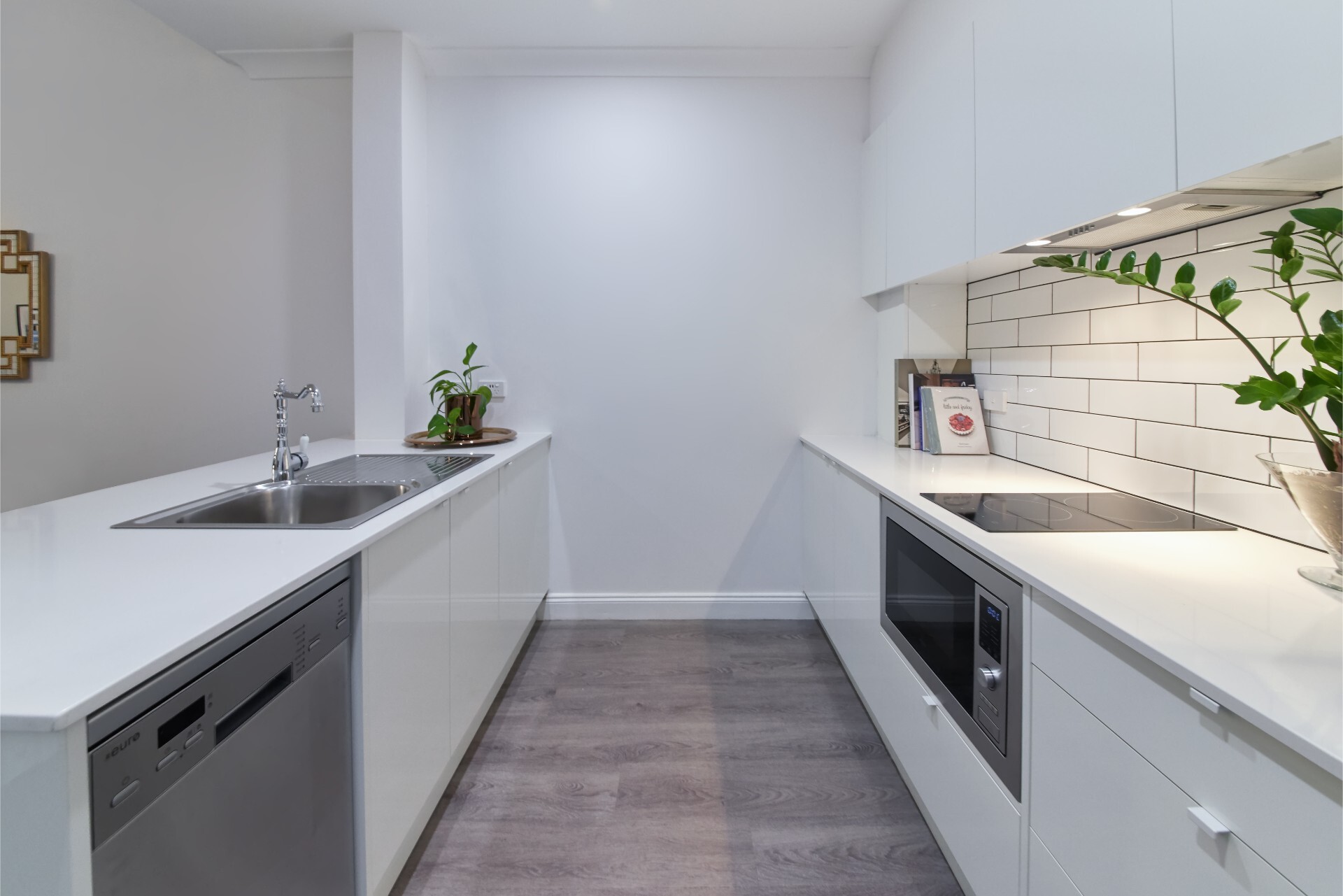
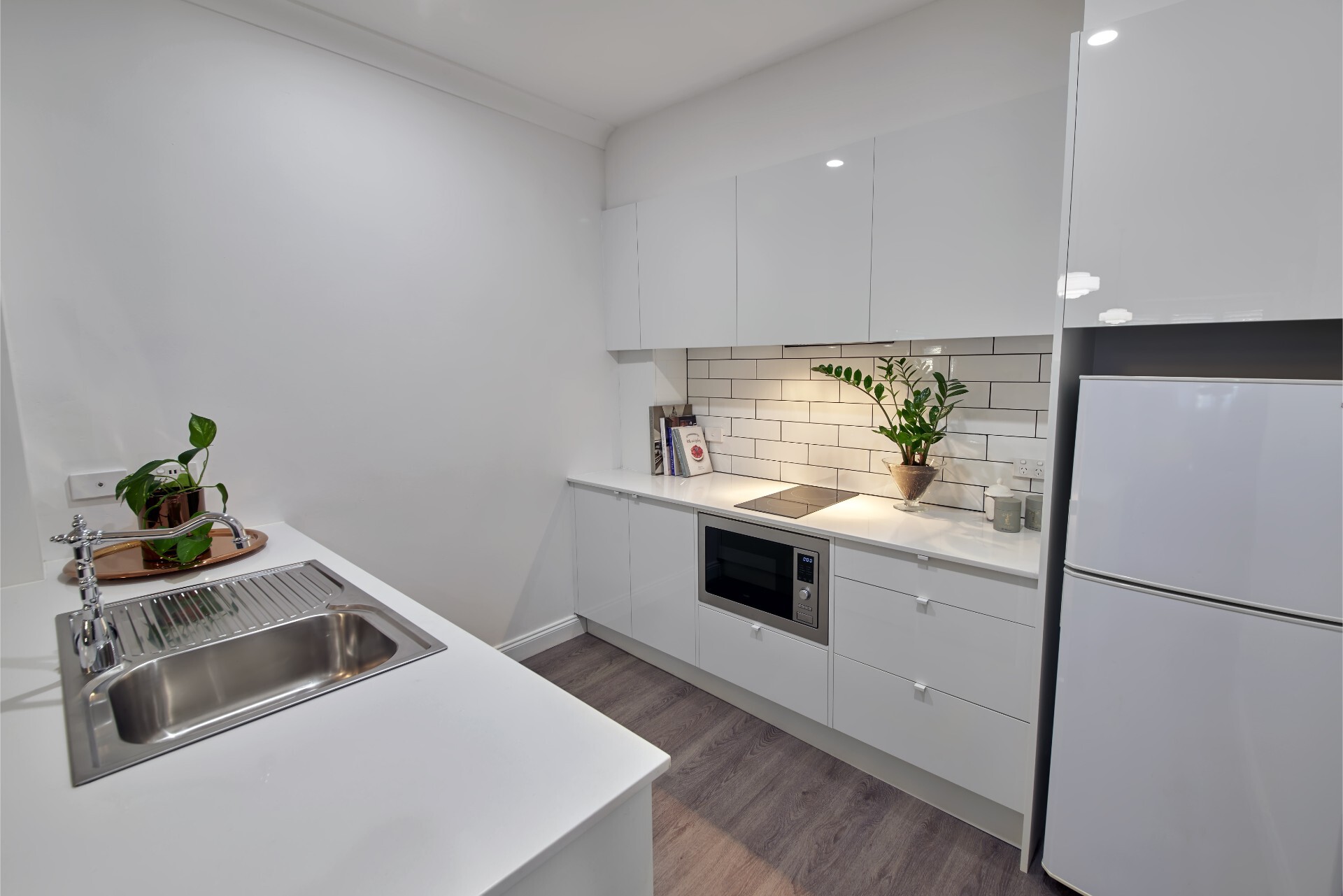
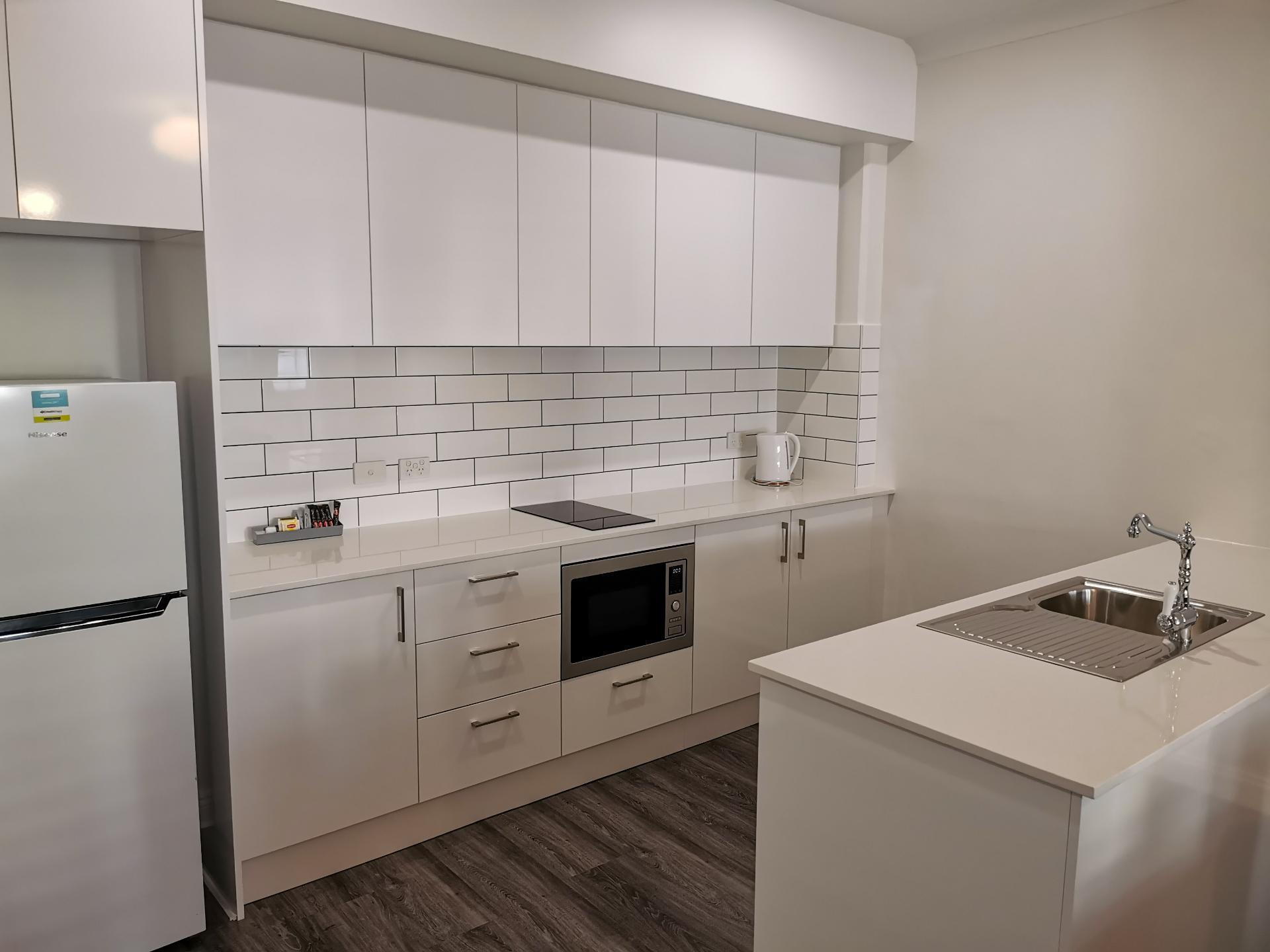
We are a heritage building at 21 Pulteney Street, in the middle of the city grid. Rundle Mall is five minutes on foot, North Terrace and the museums are ten, and the Central Market is fifteen. Every apartment is self-contained with its own kitchen, which matters more than you would think on the last night: a loaf, some cheese and one of the bottles you carried home is a better dinner than any restaurant after a day on the road.
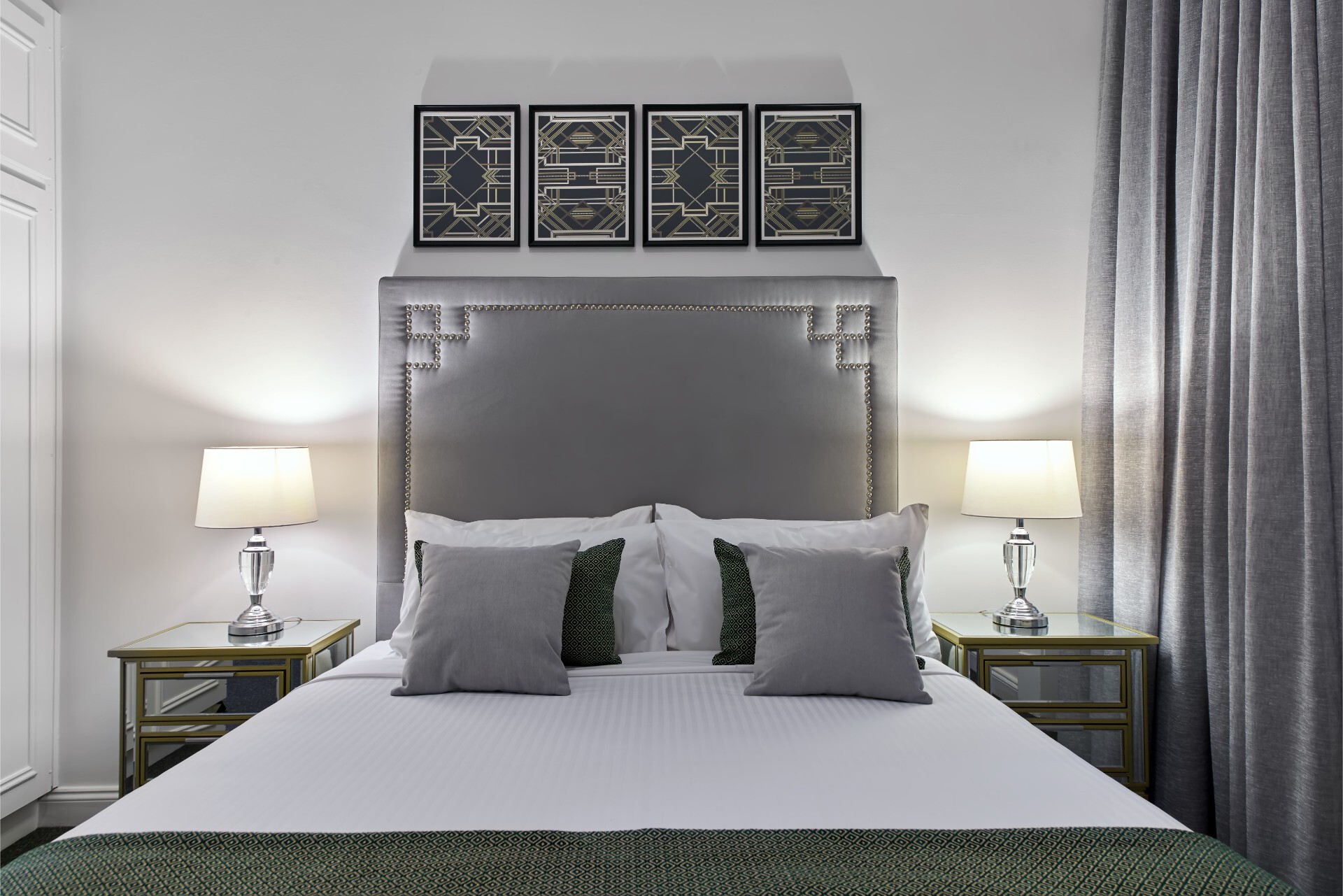
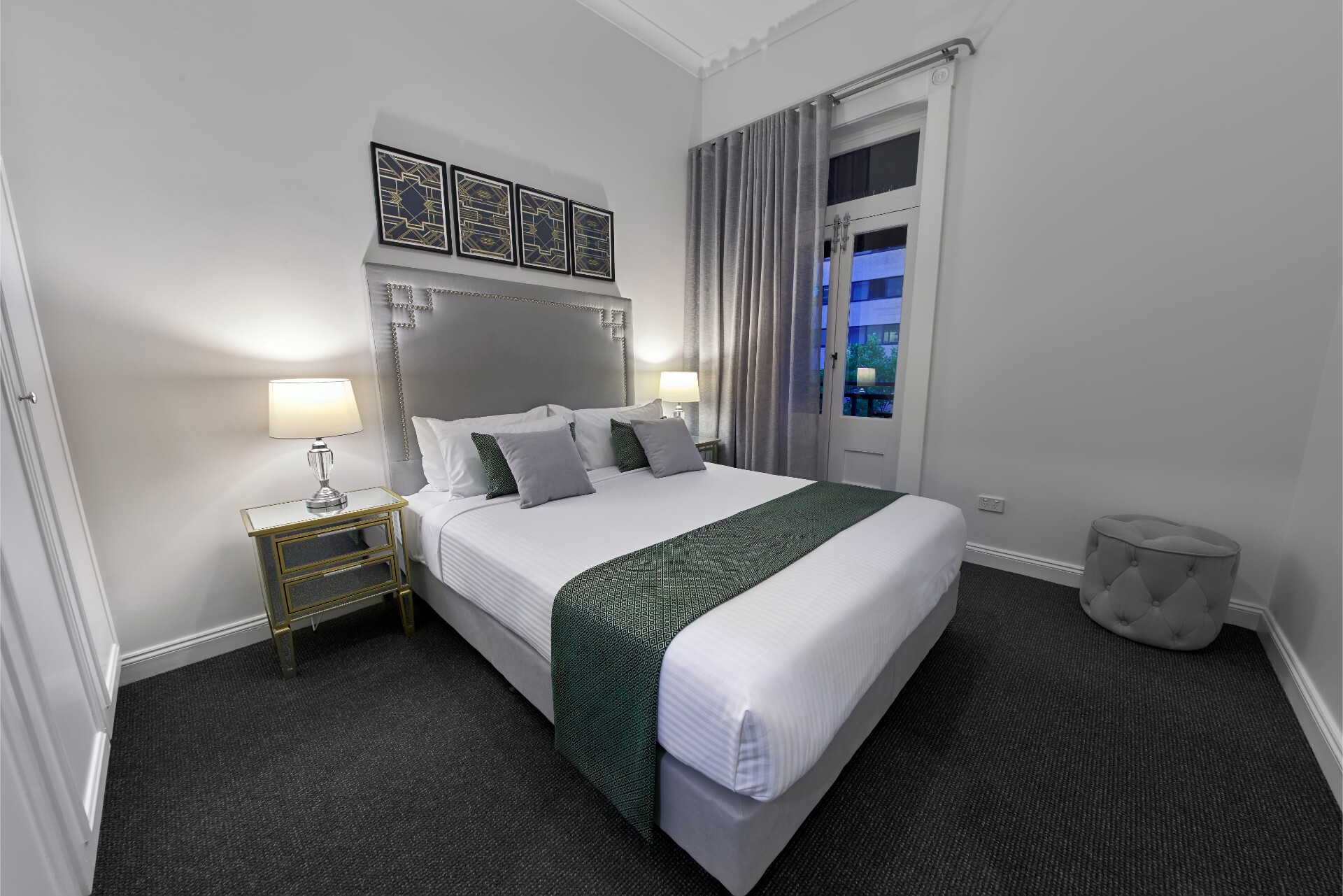
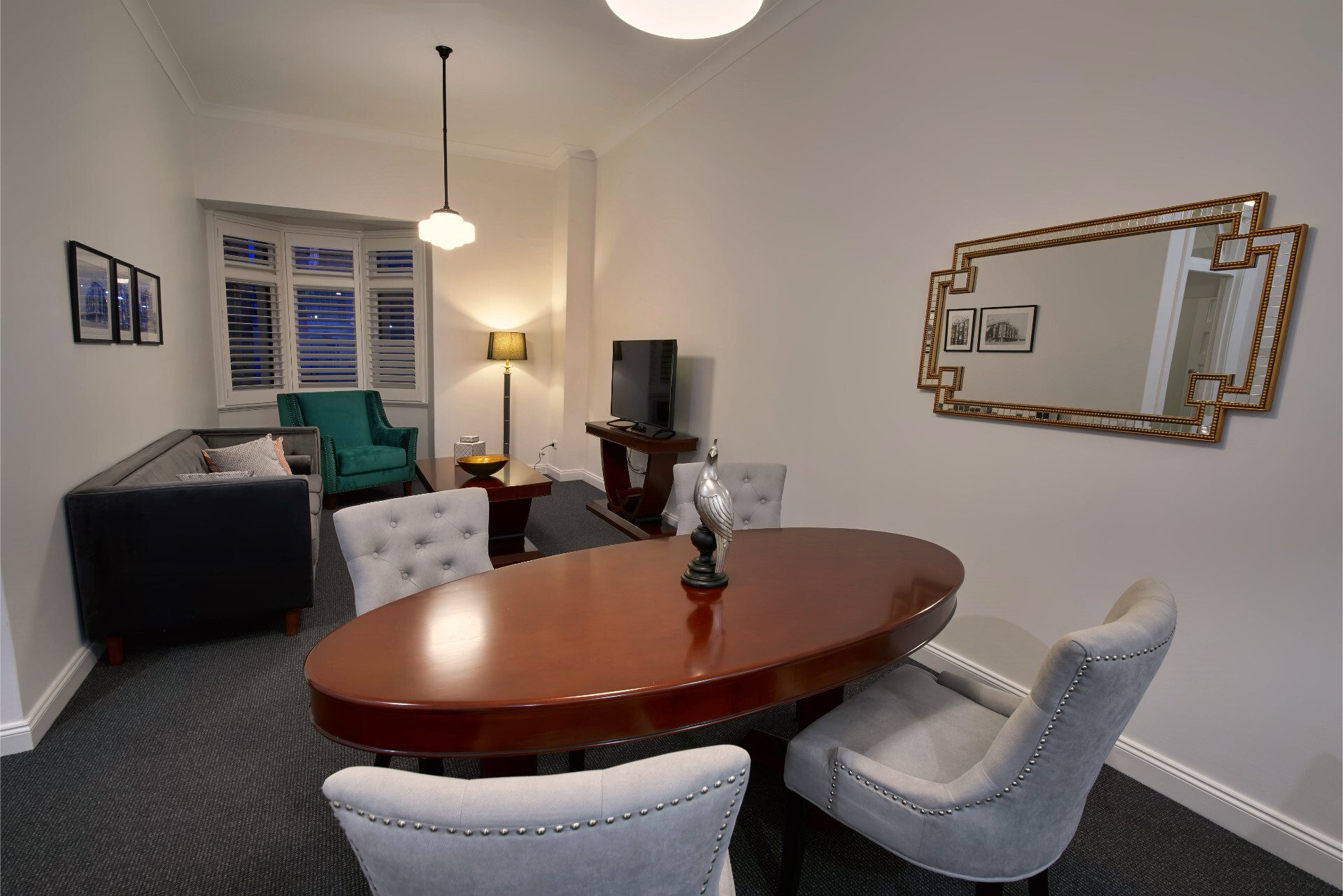
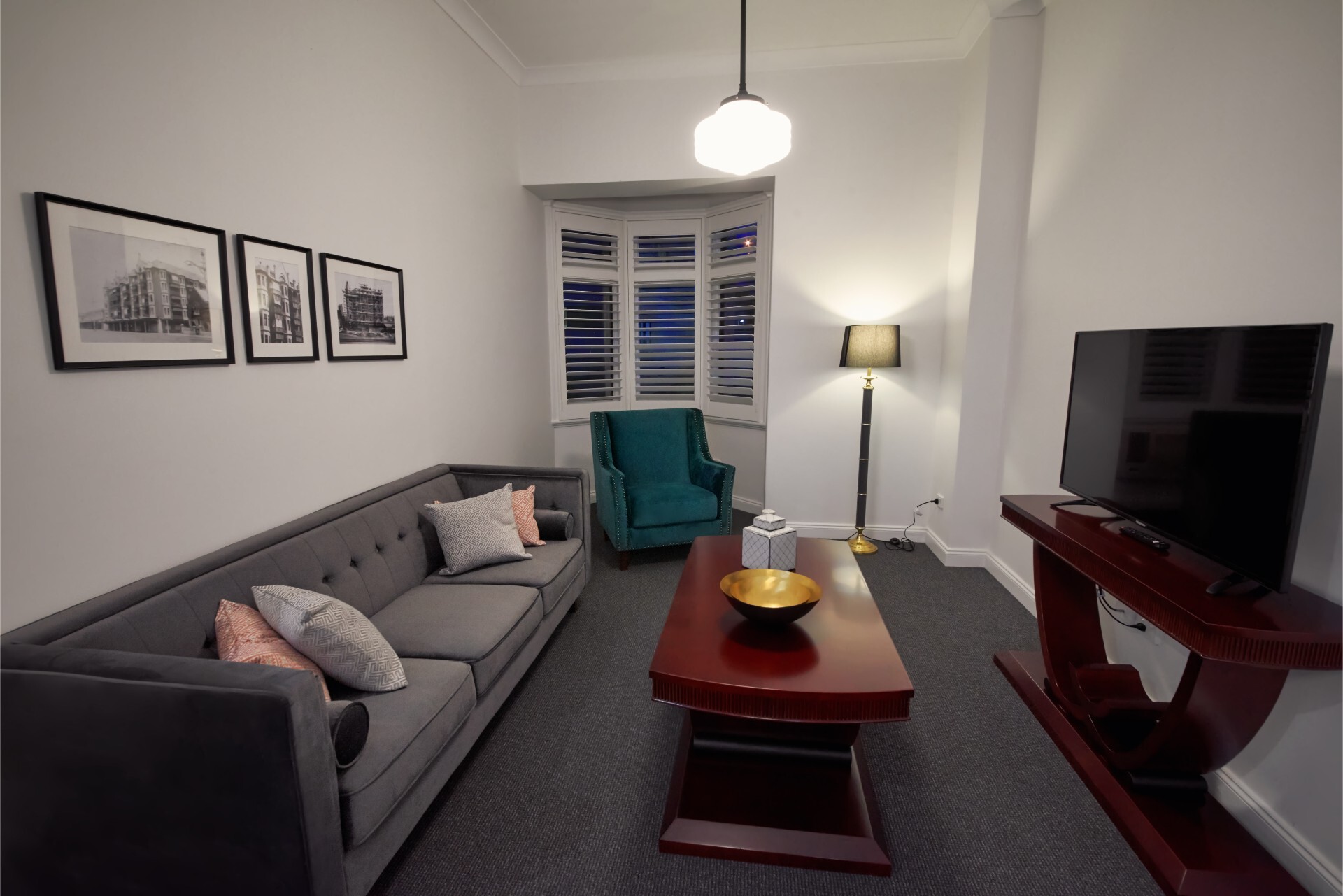
For a couple, the one bedroom apartments have a full kitchen, a dining table and room to spread out the cases. If you are travelling solo, the studio apartments are a compact and comfortable place to rest before the drive. You can compare every layout on our serviced apartments in the Adelaide CBD page, and if this is your first visit to the state, my guide to visiting Adelaide in 2026 will help you plan the city half of the trip.
Book your Adelaide nights first, then point the car at Coonawarra.
Self-contained serviced apartments in a heritage building on Pulteney Street. Start rested, come home to a kitchen and a corkscrew, and stay a night longer than you planned.
Book Your StayFrequently Asked Questions
How far is Coonawarra from Adelaide?
Coonawarra is roughly 380 kilometres south east of Adelaide. The direct inland drive through Tailem Bend, Keith and Naracoorte takes four to four and a half hours. The coastal route through Meningie, Kingston SE and Robe is longer and more scenic.
Can you visit Coonawarra as a day trip from Adelaide?
Not comfortably. It is a drive of more than four hours each way, which leaves no time to taste and no safe way to drive home. Plan on two or three nights in Penola or Coonawarra, with a night in Adelaide before and after.
What is the best time of year to visit Coonawarra?
October is the headline month, when the Coonawarra Cabernet Celebrations fill three weekends with tastings and events. April is harvest and Coonawarra After Dark, July is Cellar Dwellers with back vintage wines, and January has the Vignerons Cup race day. The cellar doors are open all year.
What wine is Coonawarra known for?
Cabernet sauvignon. The region's narrow strip of red terra rossa soil over limestone, together with a mild climate close to the sea, produces structured and fragrant cabernet that ages well. Shiraz, merlot, chardonnay and riesling are also grown here.
Where should I stay in Adelaide before driving to Coonawarra?
Stay in the CBD so you can arrive on foot and leave early. Adelaide Mansions at 21 Pulteney Street has self-contained serviced apartments with kitchens, a short walk from Rundle Mall, North Terrace and the Central Market, which makes it a practical first and last night for a Coonawarra road trip.